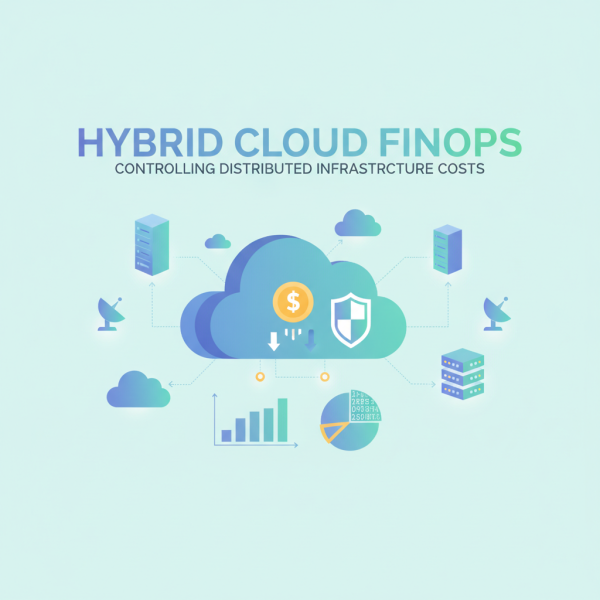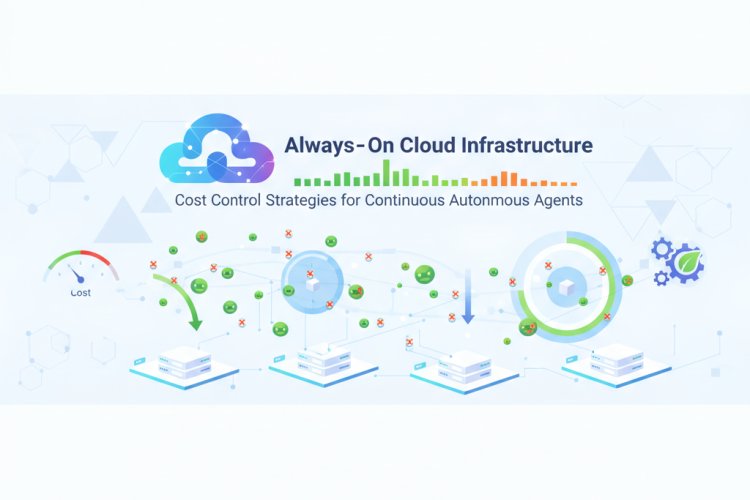

Cloud computing has delivered unmatched agility, scalability, and speed to software development. Yet, for many organizations, that freedom has come with a steep price tag. As cloud footprints grow through automated deployments, microservices architectures, and data-intensive workloads, monthly cloud bills have a tendency to spiral out of control. What began as a flexible utility model often turns into a sprawling operational expense.
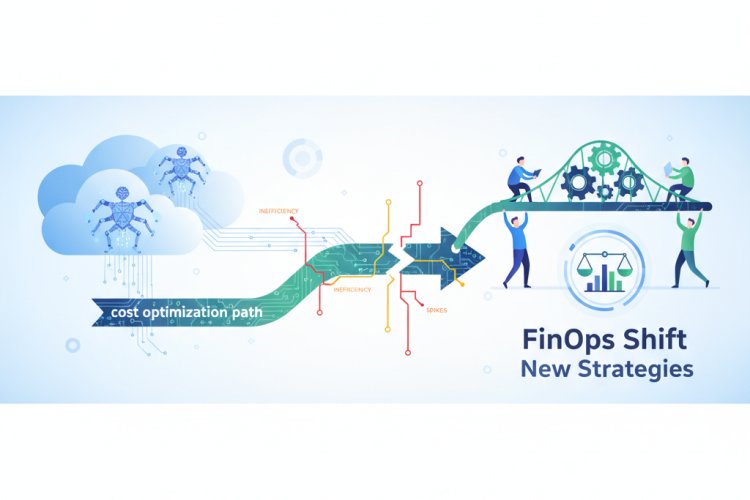
Enter the era of modern Cloud FinOps. Moving beyond simple cost-cutting exercises or reactive budget slashing, FinOps is an operational framework that brings financial accountability to the variable spend model of the cloud. It empowers engineering, finance, and business teams to make data-driven decisions together. Let us look at practical, architectural, and cultural strategies that engineering teams can implement to optimize cloud infrastructure without hurting performance or developer velocity.
1. Shift-Left Cost Awareness for Developers
Traditionally, cloud costs were treated as an afterthought—something the finance department reviewed at the end of the month after the damage was already done. By the time an unexpected bill arrived, the architectural decisions that caused the spike were deeply embedded in production code.
To truly get ahead of cloud waste, teams must adopt a shift-left mentality for cost transparency:
- Incorporate cost estimation into pull requests: Use infrastructure-as-code (IaC) scanning tools to calculate the projected monthly cost of new resources before a pull request is merged.
- Empower developers with context: Engineers do not intentionally waste money; they simply optimize for speed and reliability. Providing clear feedback loops on how architectural choices impact the bottom line changes behavior naturally.
- Establish resource ownership: Every provisioned bucket, cluster, and database should have a mandatory metadata tag identifying the owner and team responsible for its lifecycle.
2. Right-Sizing and Continuous Resource Auditing
Over-provisioning is the silent killer of cloud budgets. Out of an abundance of caution, teams frequently deploy instances with far more CPU and memory than their workloads actually require. Over time, applications change, traffic patterns shift, and those oversized instances sit largely idle.
Effective right-sizing requires moving away from static capacity planning and embracing continuous auditing:
- Analyze historical utilization metrics: Review CPU, memory, network, and storage metrics over a representative window (such as 30 days) to identify chronically underutilized resources.
- Automate instance resizing: Implement automated policies or trusted tooling that recommends or executes down-scaling for non-production environments during off-peak hours.
- Right-size managed services: Do not overlook serverless and managed database tiers, where improper configuration of concurrency limits or provisioned IOPS can quietly inflate costs.
3. Mastering Data Transfer and Egress Charges
While compute and storage get the most attention, data egress fees are frequently the most unpredictable line item on a cloud invoice. Moving data across availability zones, regions, or out to the public internet can introduce severe cost multipliers.
To keep data movement expenses manageable, infrastructure architects should evaluate their network topology:
- Keep workloads in a single zone where possible: Avoid cross-zone data transfer fees by carefully planning where application tiers and their dependent databases reside.
- Utilize content delivery networks (CDNs) and caching: Serve static assets and frequently accessed content from edge locations rather than hitting origin storage buckets repeatedly.
- Audit cross-region replication: Ensure that high-bandwidth database or storage replication policies are strictly necessary and properly optimized.
4. Leveraging Modern Commitment Strategies Wisely
Cloud providers offer substantial discounts—often up to fifty percent or more—in exchange for long-term commitments, such as savings plans or reserved instances. However, blindly locking into multi-year commitments can backfire if your architecture pivots rapidly or transitions to newer instance families.
A mature commitment strategy balances savings with flexibility:
- Cover baseline workloads only: Reserve commitments strictly for predictable, steady-state workloads that you know will run for the duration of the term.
- Maintain a flexible buffer: Leave variable, bursty, or experimental workloads on on-demand or spot pricing models to absorb fluctuations.
- Regularly review coverage reports: Set up automated alerts to track commitment utilization and expiration dates so your finance team can re-invest intelligently.
Building a Sustainable FinOps Culture
Ultimately, cloud cost optimization is not a one-time project; it is an ongoing practice. Technology leaders must foster a culture where cost efficiency is viewed as a pillar of good engineering, right alongside security, scalability, and maintainability.
By breaking down the silos between engineering and finance, implementing shift-left visibility, and continuously auditing resource utilization, organizations can harness the full power of cloud computing without breaking the bank. Sustainable infrastructure is efficient infrastructure—ensuring your engineering dollars are fueling innovation rather than evaporating into cloud waste.